
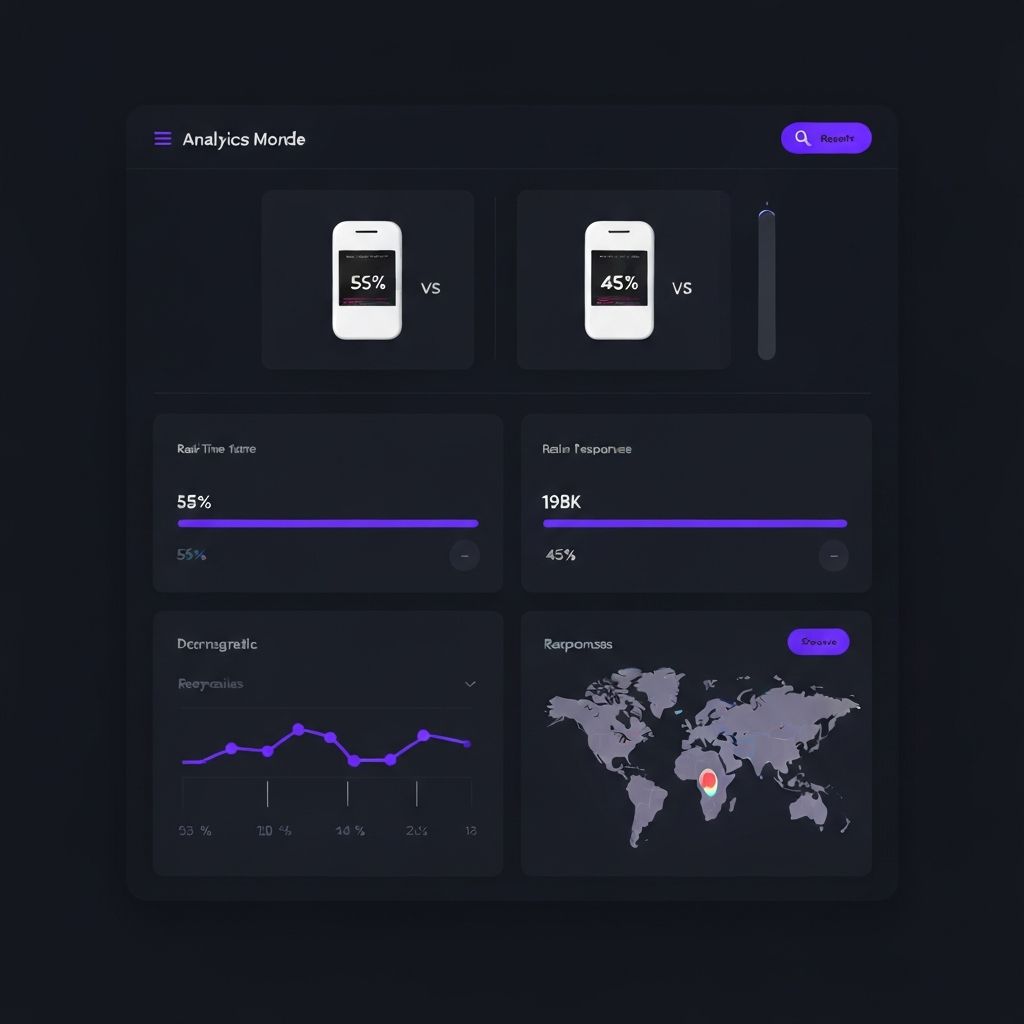
There is a gap in how organizations capture audience feedback. Social media stories disappear in 24 hours. Traditional surveys take weeks to deploy and analyze. Neither serves the need for fast, structured sentiment data.
The Speed Problem
Marketing teams operate on tight timelines. A campaign concept needs validation before creative production begins. A product team needs to understand user preference before committing engineering resources. A communications team needs to gauge reaction before a public announcement.
Traditional research cannot keep pace. By the time survey results come back, the decision window has often closed. Teams proceed without the data they need, or they delay and miss opportunities.
The Structure Problem
Social listening tools capture unstructured conversation. Comments, mentions, and shares can indicate general sentiment, but they are difficult to quantify and compare. When you need to choose between Option A and Option B, qualitative signal is not enough.
You need structured data: clear questions with measurable responses that can inform specific decisions.
Where Polst Fits
Polst occupies the space between ephemeral social engagement and slow traditional research. It provides real-time structured sentiment that organizations can act on immediately.
A question posted in the morning can deliver actionable data by afternoon. That speed, combined with structured output, creates a new category: the sentiment layer.
Integration, Not Replacement
The sentiment layer does not replace existing tools. Analytics platforms still track behavior. CRM systems still manage relationships. Social tools still monitor conversation.
What Polst adds is a direct line to stated preference. When you need to know what your audience thinks about a specific decision, you can ask them and get an answer quickly.
Building the Layer
Organizations that adopt this approach build sentiment capture into their existing workflows. Questions are embedded in content, shared through existing channels, and displayed on screens where audiences already gather.
Over time, this creates a continuous stream of audience intelligence that informs decisions across departments. Marketing, product, communications, and leadership all benefit from the same data source.
The sentiment layer is not a tool you use occasionally. It becomes infrastructure for how your organization makes decisions.
Ready to add a sentiment layer to your organization?
Get Started